
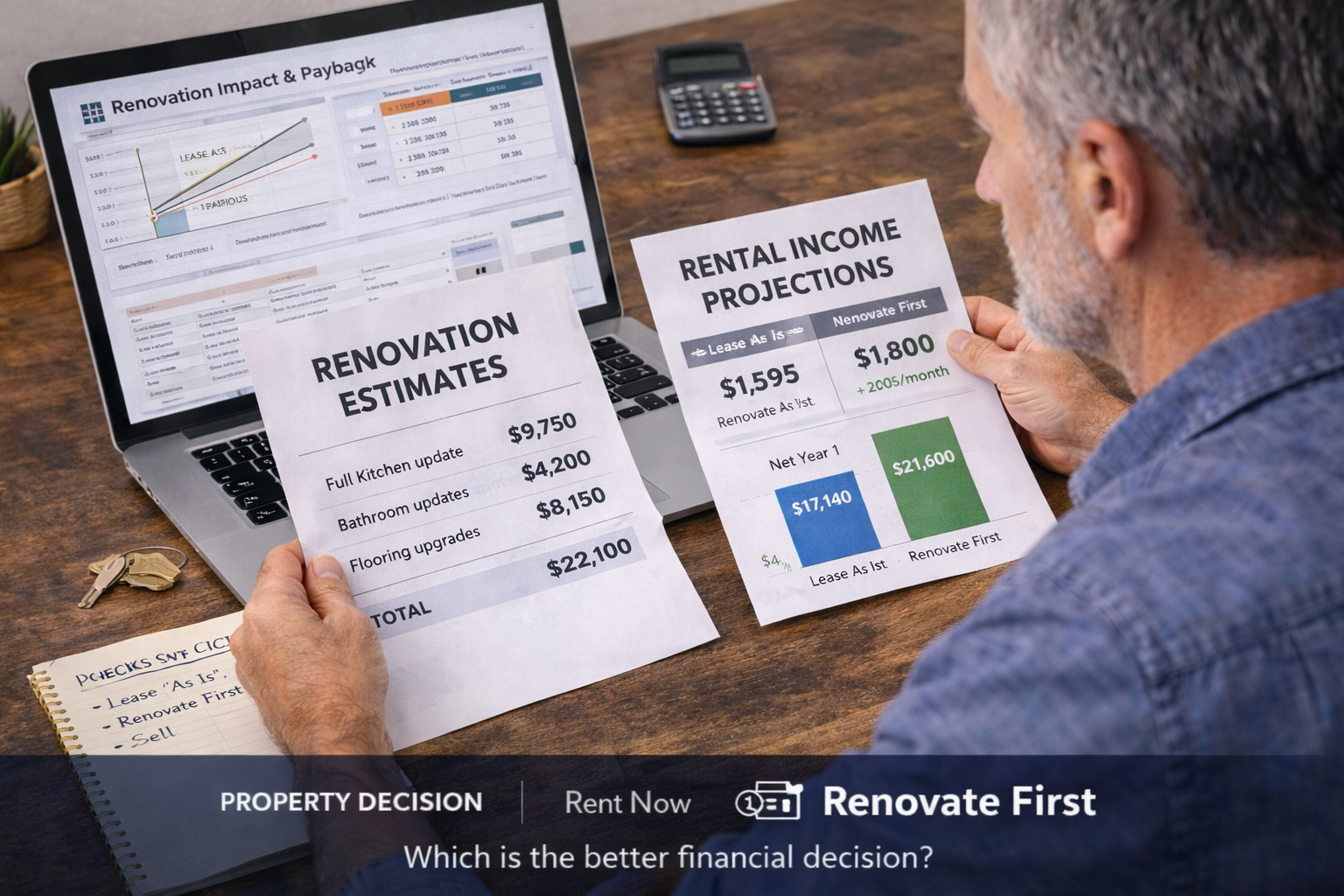
Lease As Is vs Renovate Before Renting
This is a capital allocation decision. Every dollar spent renovating must either increase rent, reduce vacancy, improve tenant quality, or lower long term maintenance risk.
This tool helps you decide whether to lease the property in its current condition or invest in improvements before placing a tenant. For a broader framework on how these decisions impact long term performance, review our Rental Property Cash Flow hub.
Why This Decision Is Often Emotional
Landlords commonly think:
- “It looks dated but it works.”
- “If I upgrade everything, I will attract better tenants.”
- “I do not want to over improve.”
The right answer is not aesthetic. It is economic.
Renovations must be justified by return, not preference.
That return should be measured through improved rental property cash flow, not just higher rent expectations.
Step 1: Estimate Renovation Cost
List realistic improvements you are considering:
- Flooring replacement
- Interior paint
- Kitchen updates
- Bathroom updates
- Appliance replacement
- Exterior improvements
Total the actual contractor estimates, not optimistic assumptions.
Step 2: Project Rent Increase
Compare:
- Current rent potential as is
- Projected rent after improvements
Example:
- As is rent: $1,450
- Renovated rent: $1,650
- Monthly increase: $200
If renovation cost is $12,000, it takes 60 months to recover that capital at $200 per month. That payback period directly affects your cash flow return.
Step 3: Evaluate Tenant Quality Impact
Higher quality finishes can:
- Attract stronger applicants
- Reduce turnover
- Encourage better care of the unit
But improvements do not eliminate screening risk. Tenant selection still matters more than finishes. The goal is consistent and stable rental property cash flow, not just visual upgrades.
Step 4: Vacancy Timeline
Renovation delays leasing. Consider:
- Contractor scheduling delays
- Supply delays
- Inspection timing
- Lost rent during project timeline
If renovation extends vacancy by 60 days at $1,500 per month, that is an additional $3,000 cost. That delay reduces short term cash flow and increases risk exposure.
Step 5: Long Term Maintenance Reduction
Some renovations reduce future risk:
- New roof reduces leak probability
- New HVAC lowers emergency calls
- Plumbing upgrades reduce water damage risk
These improvements may not raise rent significantly but can stabilize long term rental property cash flow by reducing unexpected costs.
When Leasing As Is Makes Sense
- Cosmetic issues only
- Strong demand in market
- Limited reserves
- Low expected rent premium from upgrades
- Short hold period
In these cases, preserving capital and maintaining steady cash flow is often the better outcome.
When Renovating Makes Sense
- Significant rent gap
- Deferred maintenance risks present
- Targeting higher quality tenant pool
- Long term hold strategy
- Strong reserves to absorb delay
Renovation makes sense when it clearly improves long term rental property cash flow after all costs and delays are considered.
Stress Test Question
If renovation goes over budget by 25 percent and takes 30 days longer than expected, does that destabilize you?
If yes, leasing as is may be the safer path. That usually indicates your margin for error within your cash flow structure is too thin.
Related Landlord Decision Tools
- Landlord Decision Tools Hub
- Rental Property Cash Flow
- Raising Rent vs Re Leasing a Property
- How Much Risk Can I Afford as a Landlord
- What Does One Bad Tenant Really Cost
- When Does a Rental Become Passive Income
Bottom Line
Renovation is an investment decision, not a pride decision.
Lease as is when capital preservation and speed matter.
Renovate when the return justifies the delay and strengthens long term performance.
The right answer depends on your reserves, market demand, and time horizon. Ultimately, the correct decision is the one that produces stronger, more stable rental property cash flow.