
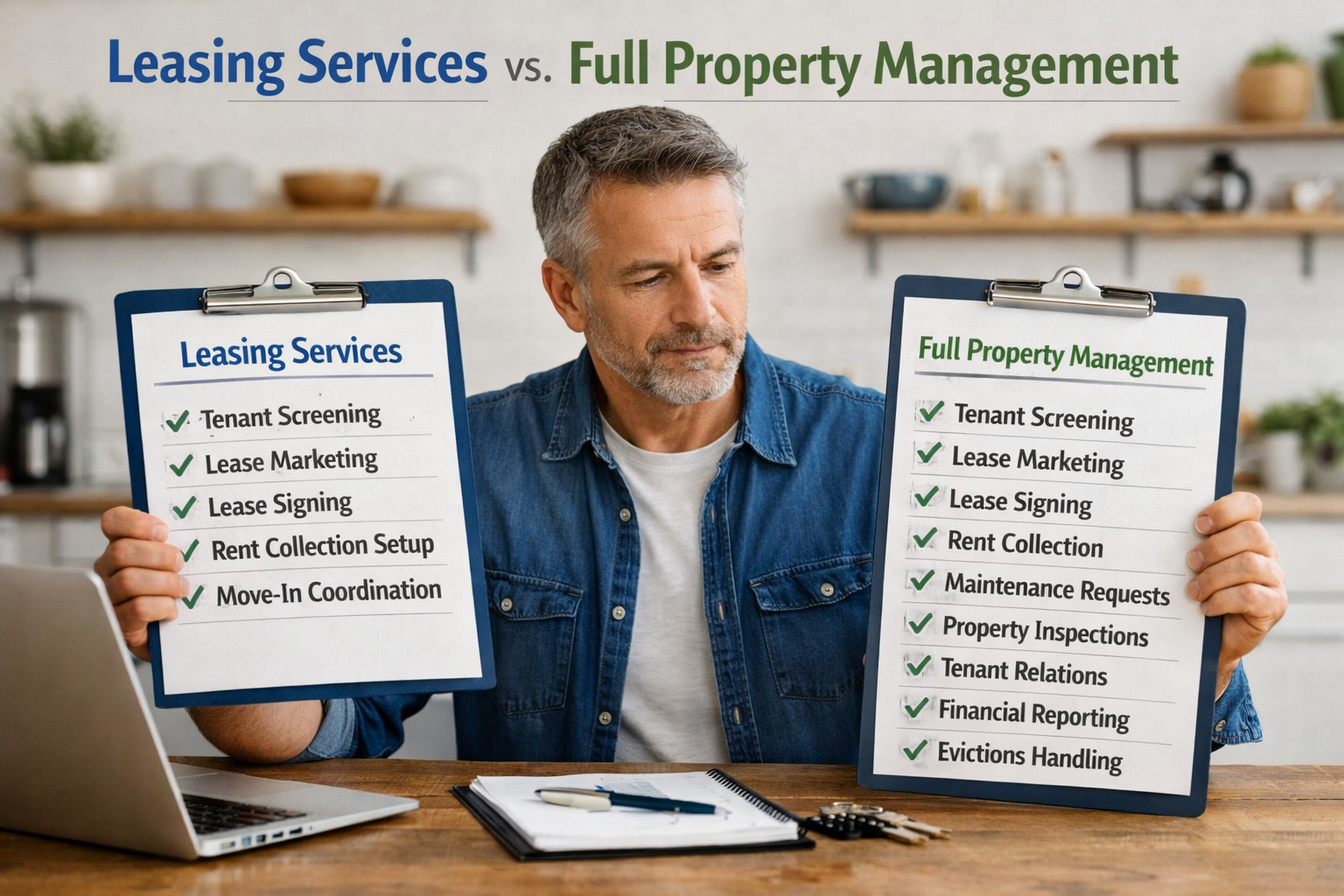
Leasing vs Full Property Management
Landlords often reach a crossroads after buying a rental property: should you hire a company just to lease the property, or turn everything over to full property management? The right answer depends on how involved you want to be, how many properties you own, and how much time and risk you are willing to carry.
This guide breaks down the real differences between leasing services and full property management so you can choose the option that fits your situation without paying for more than you need. For a broader financial lens on how this choice affects long term performance, review our Rental Property Cash Flow hub.
What Is Leasing Only?
Leasing services focus on one job: placing a qualified tenant in your rental property. After the lease is signed and the tenant moves in, ongoing management responsibilities remain with the owner.
- Pricing the rental correctly
- Marketing and advertising the property
- Handling showings and inquiries
- Screening applicants using consistent standards and documentation
- Preparing the lease and move in documentation
Leasing is often a strong fit for landlords who want control over their property but want help avoiding vacancies and bad tenants.
Before deciding, it helps to understand the real cost of a placement mistake. See What Does One Bad Tenant Really Cost to understand the financial downside of weak screening.
Leasing only can preserve margins, but only if the property still produces stable rental property cash flow after you handle the rest of the work yourself.
What Is Full Property Management?
Full property management covers the entire lifecycle of the rental. In addition to leasing, a property manager handles day to day operations after the tenant moves in.
- Rent collection and late notices
- Maintenance coordination
- Tenant communication
- Lease enforcement
- Move out handling
- Ongoing compliance support
Full management is designed for owners who want minimal involvement or who own multiple properties and need operational relief.
If your hesitation is financial, you may also want to review When Does a Rental Become Passive Income to see how involvement levels impact your return.
Management fees reduce margin, but they may improve consistency, reduce disruption, and protect cash flow if self management is creating mistakes or burnout.
Side-by-Side Comparison
| Category | Leasing Only | Full Management |
|---|---|---|
| Tenant Placement | Included | Included |
| Rent Collection | Owner handled | Manager handled |
| Maintenance | Owner handled | Manager coordinated |
| Monthly Fees | No ongoing fee | Percentage of rent |
| Owner Involvement | Moderate | Minimal |
The right choice is not just about fees. It is about which model gives you the strongest and most sustainable rental property cash flow after time, stress, vacancy risk, and mistakes are accounted for.
Which Option Is Right for You?
Leasing services tend to work best if:
- You own one to five rental properties
- You are comfortable handling maintenance and rent collection
- You want to avoid long vacancies or screening mistakes
- You prefer predictable, one-time leasing costs
Full property management may be a better fit if:
- You live out of state
- You own multiple rentals
- You do not want tenant calls or maintenance coordination
- You value time savings over monthly fee optimization
If you are unsure, many landlords start with leasing only and move to full management later as their portfolio grows.
A useful way to decide is to compare each option against your actual reserves, workload, and expected cash flow, not just the management fee.
Related Landlord Decision Tools
Leasing versus management is just one strategic decision. You may also want to explore:
- Rental Property Cash Flow
- Is My Rental Still Worth Keeping
- Should I Sell or Keep My Rental Property
- How Much Risk Can I Afford as a Landlord
- Can I Afford to Self Insure My Rental Property
- Raising Rent vs Re Leasing a Property
- Lease As Is vs Renovate Before Renting
- Do I Need Property Management Software
- Can Software Replace a Property Manager
- Best Property Management Software for Small Landlords
You can view the full framework at the Landlord Decision Tools Hub.
Talk to a Leasing Specialist
If you are deciding between leasing only and full property management, we can help you evaluate your property, timeline, and goals before committing to either option.
This page is for educational purposes only and does not constitute legal or financial advice. Leasing services vary by market, property type, and owner needs.