
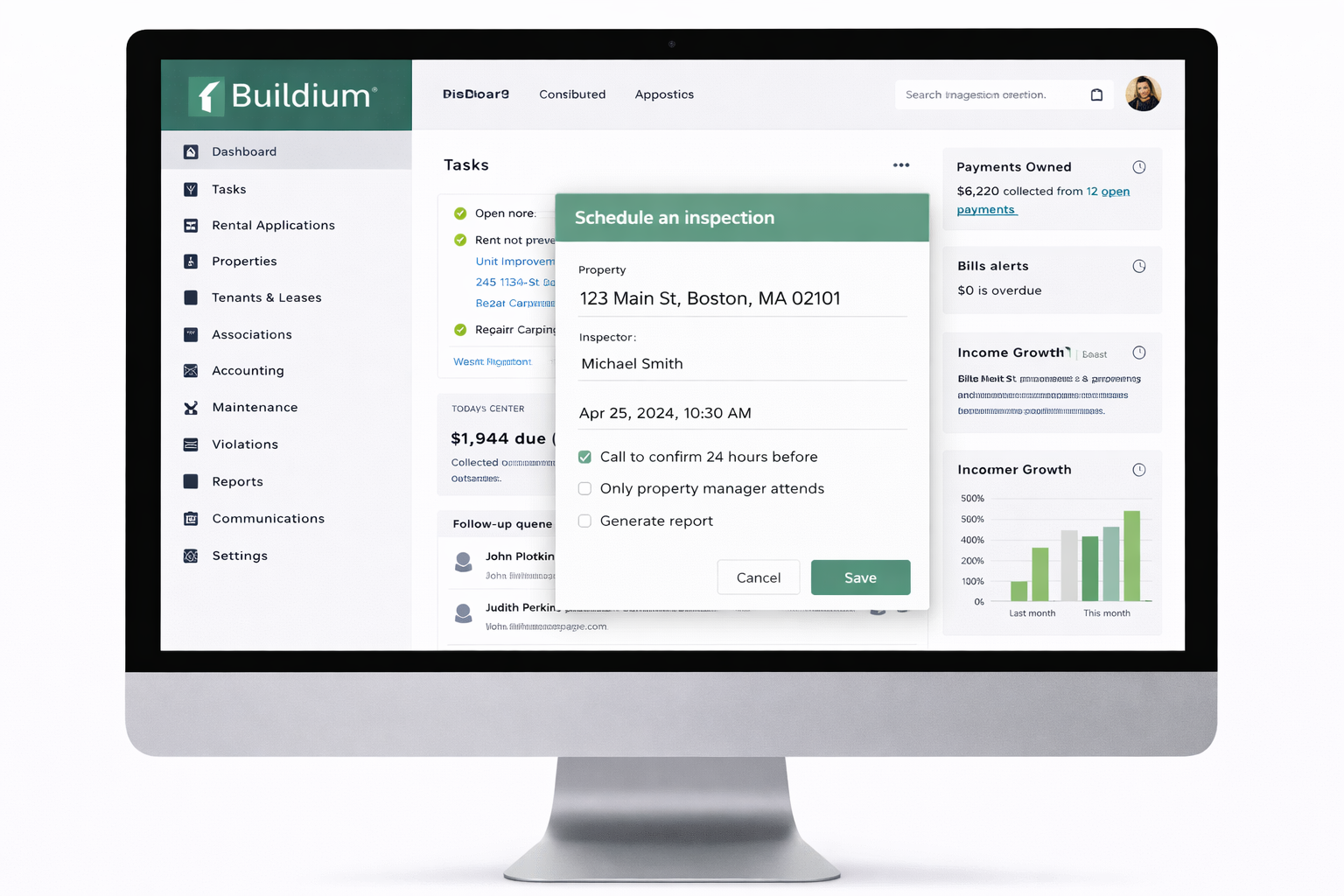
Buildium Features Breakdown
Buildium is a long standing property management platform known for strong accounting, structured workflows, and deeper operational controls. This guide breaks down the main Buildium features so landlords can see where the platform is strongest, where it may feel heavier for smaller portfolios, and whether it fits the way they actually manage rentals.
What Buildium is designed for
Buildium is designed for landlords and property managers who need stronger accounting, more structured processes, and better reporting across growing residential or mixed use portfolios.
It tends to fit operators who are moving beyond simple rent collection and want a more formal system for leases, maintenance, accounting, and owner reporting.
Tenant and lease management
- Tenant profiles and communication tools
- Lease tracking with renewal alerts
- Document storage and eSign support
- Custom fields and lease level detail
One of the more valuable Buildium software features is the way lease records, communication history, and documents stay tied together inside one system.
Related guide: Lease Renewal Process
Online rent collection
- ACH and card payments
- Recurring rent schedules
- Automated late fees and reminders
- Detailed payment histories
Rent collection is one of the most practical Buildium property management tools because it combines payment visibility, late fee handling, and clearer records in a way that scales better than manual systems.
Rent tools: Software for Rent Collection
Maintenance management
- Tenant maintenance portals
- Work orders and vendor assignment
- Maintenance history and cost tracking
- Approval workflows
Maintenance is another area where Buildium capabilities stand out. Stronger work order structure and history tracking can matter a lot once the portfolio grows and repair activity gets harder to follow manually.
Maintenance support: Software for Maintenance Tracking
Accounting and financial reporting
- Full trust accounting
- Property and portfolio level profit and loss reporting
- Owner statements and distributions
- Bank reconciliation
- Tax ready reporting
This is where Buildium is often strongest. For landlords who care deeply about clean books, audit trail quality, and more formal reporting, the accounting side of Buildium can be a major advantage.
Accounting tools: Accounting Software for Landlords
Tenant screening integrations
- Credit and background checks
- Eviction history reporting
- Income verification support
Screening integrations matter because good software should help reduce leasing mistakes, not just make the process faster.
Screening guidance: Tenant Screening Software
Automation and workflows
- Task automation
- Late fee and notice automation
- Recurring inspections and reminders
- More structured operational workflows
Buildium is generally better suited to landlords who appreciate process and structure. That can feel powerful for a growing portfolio, but excessive for a very small one.
Owner and tenant portals
- Owner access to reports and statements
- Tenant portals for payments and requests
- Secure messaging and shared visibility
These portal features are especially useful once there are multiple stakeholders involved, whether that means owners, partners, or a larger tenant base.
Where Buildium is strongest
- Accounting depth
- Scalability
- Compliance friendly documentation
- Mixed portfolio support
- Structured operating workflows
Where Buildium may fall short
- Steeper learning curve
- Higher cost for small portfolios
- Interface may feel less modern than newer tools
- Can be more system than a very small landlord actually needs
That does not make Buildium a weak option. It just means its strengths show up most clearly when the portfolio is large enough to benefit from added structure.
Buildium vs DoorLoop on features
Many landlords comparing Buildium features are really deciding between Buildium and DoorLoop. Both platforms cover rent collection, maintenance, tenant management, and reporting, but they feel different in daily use.
Buildium usually appeals more to landlords who prioritize accounting depth, structure, and long term operational maturity. DoorLoop often appeals more to landlords who want a cleaner interface and faster adoption.
If your top priority is depth and formal reporting, Buildium often has the edge. If your top priority is usability and simplicity, DoorLoop may feel lighter and easier.
Is Buildium the right fit
Buildium is best suited for landlords who prioritize accounting accuracy, reporting, and long term scalability over simplicity. If you are building a more formal rental operation and want stronger controls, Buildium is worth serious consideration.
Want to see Buildium for yourself?
The fastest way to judge whether Buildium fits your workflow is to review the current platform and see how the reporting and operational tools are structured.
Buildium features FAQs
What are the most important Buildium features?
Is Buildium good for small landlords?
Does Buildium include accounting tools?
Own rentals in Florida and need help buying or selling investment property Visit Golden Hour Real Estate. Need financing for rental properties Visit 360 Mortgage. Need insurance guidance for rentals Visit Henson Agency.