
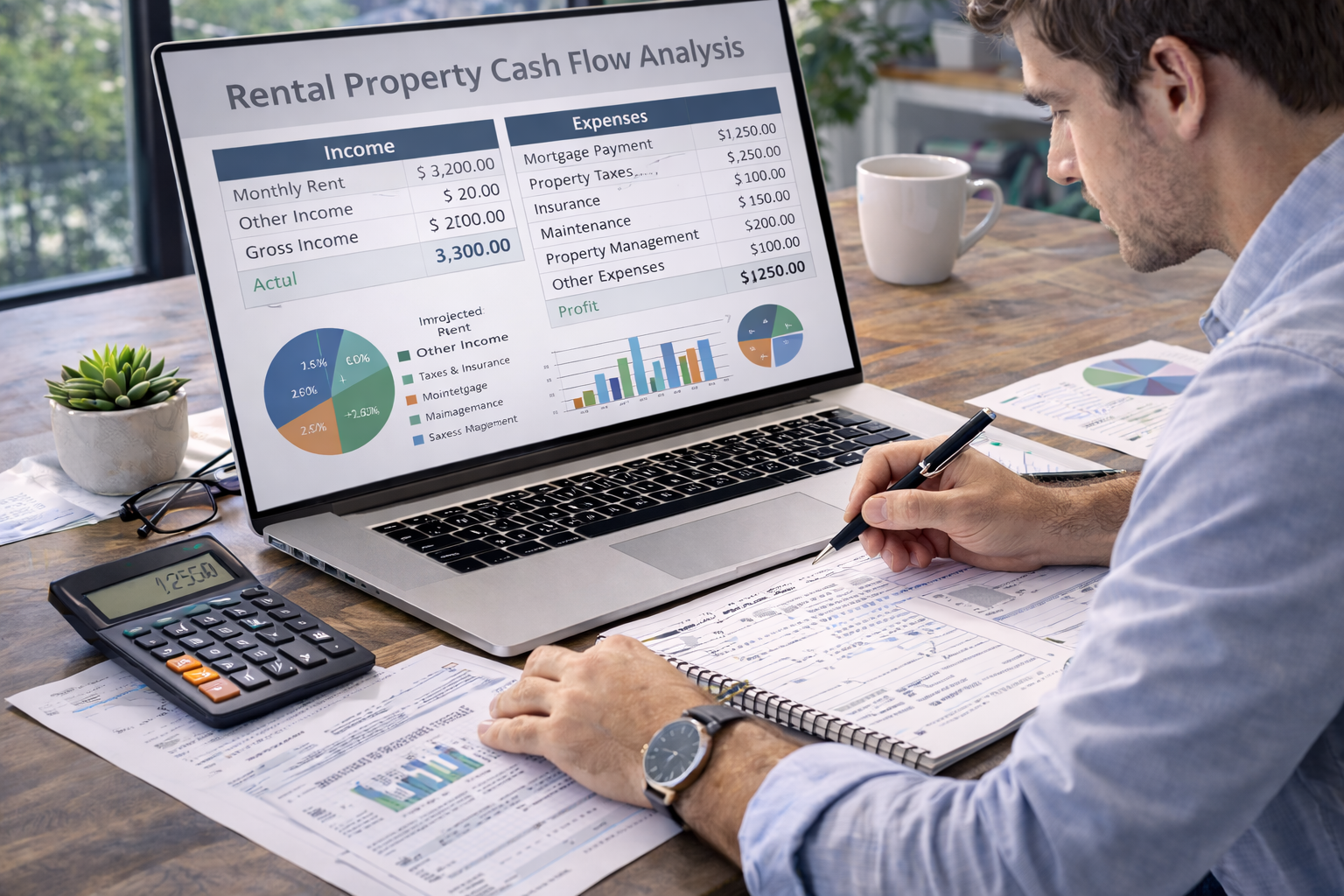
Rental Property Cash Flow Guide for Landlords and Investors
Cash flow is one of the most important concepts in rental property investing. It represents the money left over each month after paying all expenses related to owning and operating a rental property. Investors who understand cash flow are better positioned to build sustainable portfolios and avoid properties that become financial burdens.
While property appreciation and tax advantages can be valuable, many successful investors prioritize consistent positive cash flow because it provides stability and allows portfolios to grow over time.
Rental property cash flow measures the difference between total rental income and total operating costs. Positive cash flow means the property generates surplus income. Negative cash flow means the property requires additional money from the owner each month.
What Is Rental Property Cash Flow
Cash flow is the amount of money remaining after collecting rent and paying all property expenses. These expenses typically include the mortgage payment, insurance, property taxes, maintenance costs, and management expenses.
A simple way to think about cash flow is:
When this number is positive, the property produces income each month. When it is negative, the investor must contribute additional funds to keep the property operating.
Typical Rental Property Income Sources
Most rental properties generate income through monthly rent payments. However, additional revenue streams can sometimes improve overall cash flow.
- Monthly tenant rent
- Parking fees
- Pet fees
- Laundry income
- Storage rental
- Short term rental income where permitted
The reliability of income is just as important as the total amount collected. Stable tenants and consistent demand support stronger long term performance.
Common Rental Property Expenses
Many new landlords underestimate the number of expenses associated with owning rental property. Accurate cash flow projections require including all realistic costs.
- Mortgage payment
- Property taxes
- Landlord insurance
- Maintenance and repairs
- Property management
- Vacancy periods
- Capital improvements
For a deeper breakdown of operating costs, see our guide on rental property expenses.
Experienced landlords usually estimate maintenance and vacancy expenses even when the property is fully occupied. This creates more realistic projections and prevents unexpected financial stress.
Why Cash Flow Matters for Landlords
Strong cash flow helps investors maintain properties, build reserves, and continue expanding their portfolios. Properties that consistently produce income are easier to manage and provide greater financial flexibility.
Positive cash flow can allow investors to:
- Reinvest in additional properties
- Build repair reserves
- Reduce financial risk during vacancies
- Create long term passive income
How Financing Affects Rental Property Cash Flow
Financing structure plays a major role in determining whether a property produces positive cash flow. Loan terms such as interest rate, loan amount, and amortization period directly affect the monthly payment.
Many real estate investors use financing structures that consider the property’s rental income when evaluating loan qualification. One example is a DSCR loan, which focuses on whether the rental income supports the mortgage payment.
You can learn more about these financing options here:
DSCR loans for rental property investors
Understanding how financing interacts with rental income is an important part of building a successful investment strategy.
How Investors Analyze Cash Flow Before Buying
Successful investors typically analyze potential cash flow before purchasing a property. This helps determine whether the investment meets their financial goals.
Key factors investors evaluate include:
- Estimated monthly rent
- Mortgage payment
- Insurance cost
- Property tax rate
- Maintenance reserves
- Expected vacancy rate
For a step by step approach, see our guide on how to calculate rental property cash flow.
A property that appears profitable based only on rent and mortgage payment may still perform poorly if maintenance costs, vacancy periods, and operating expenses are ignored.
Cash Flow vs Property Appreciation
Some investors focus primarily on long term property appreciation while others prioritize strong monthly income. Both strategies can work depending on the market and the investor’s financial goals.
Cash flow oriented investors typically look for:
- Lower purchase prices relative to rent
- Stable tenant demand
- Reasonable operating costs
- Predictable neighborhood growth
Appreciation focused investors may accept lower cash flow in exchange for strong long term property value growth.
Common Mistakes When Evaluating Rental Property Cash Flow
Many investors make similar mistakes when estimating cash flow for the first time. These mistakes can lead to unrealistic expectations and financial surprises.
- Ignoring maintenance expenses
- Assuming zero vacancy
- Underestimating insurance costs
- Forgetting property management expenses
- Using unrealistic rent estimates
A conservative analysis usually produces more reliable long term results.
How Cash Flow Supports Portfolio Growth
Positive cash flow allows investors to accumulate capital that can be used for future purchases. Over time, this process can support significant portfolio expansion.
Investors who maintain strong cash flowing properties often find it easier to qualify for additional financing and manage multiple rental units.
For more guidance on expanding portfolios, see:
- Cash flow measures income remaining after all rental property expenses
- Positive cash flow helps investors maintain and grow portfolios
- Accurate expense projections are critical for realistic analysis
- Financing structure significantly affects monthly cash flow
- Long term success often comes from stable income producing properties