
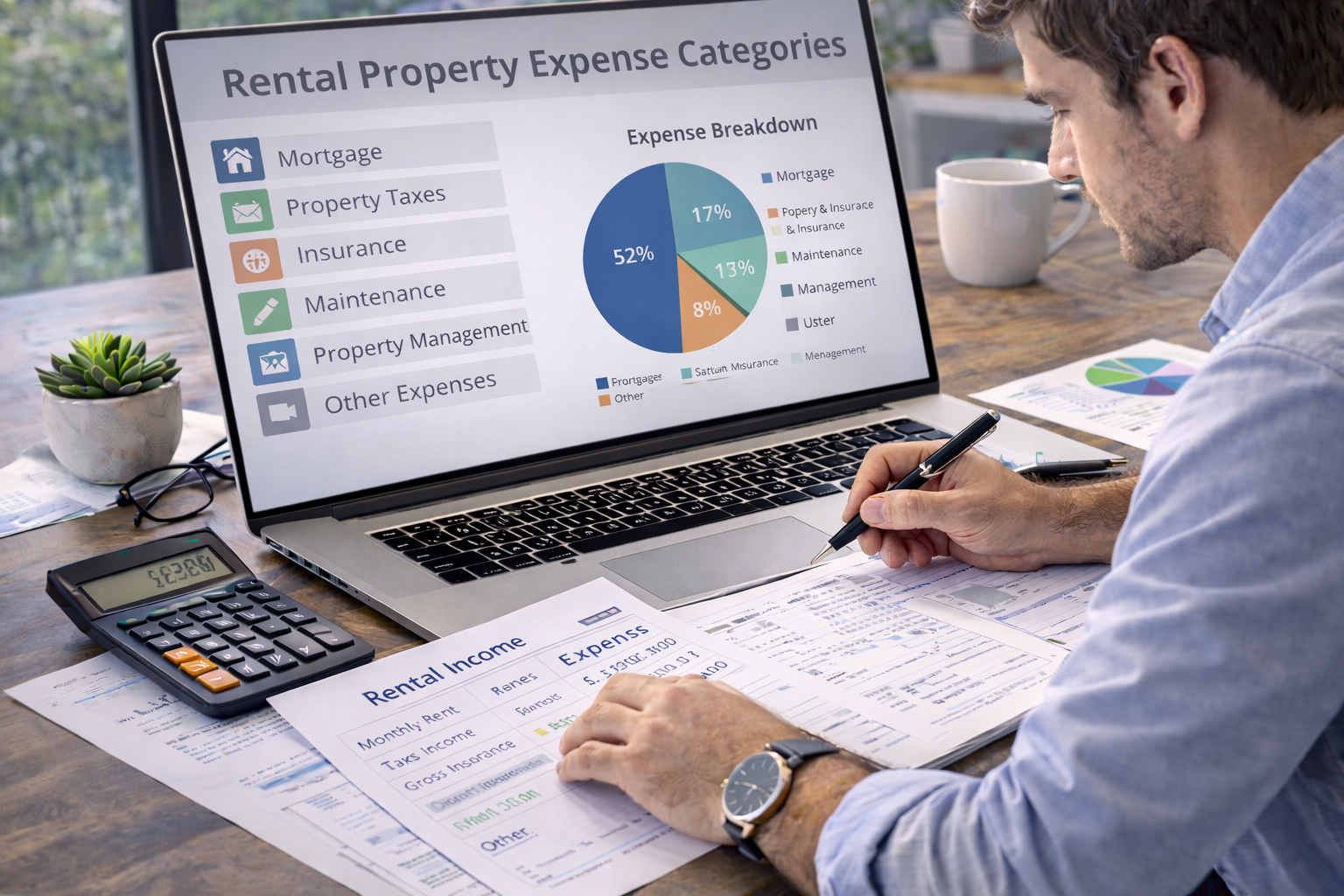
Rental Property Expenses List for Landlords and Investors
One of the biggest mistakes rental property owners make is underestimating expenses. A property may look profitable when you only compare rent to the mortgage payment, but the real financial picture is much broader. Understanding the full rental property expenses list is essential if you want to analyze deals accurately, protect cash flow, and avoid surprise costs.
Whether you own one rental home or plan to build a larger portfolio, expense awareness is one of the foundations of strong investing.
If you are new to this topic, start with our main guide to rental property cash flow.
A rental property does not become profitable because rent is high. It becomes profitable when income remains strong after all realistic expenses are included.
Why Rental Property Expenses Matter So Much
Expenses are what determine whether rent turns into real cash flow. Many landlords focus on the income side of the deal because it is more exciting, but long term success often comes from controlling costs and planning for them correctly.
Even a property with strong rent can underperform if expenses are underestimated. That is why experienced investors build expense awareness into every deal from the beginning.
Mortgage Payment
For many rental properties, the mortgage payment is the largest monthly expense. This usually includes:
- Principal
- Interest
- Property taxes if escrowed
- Insurance if escrowed
Many landlords stop here, but this is only one part of the full expense picture.
Because financing plays such a large role in monthly cash flow, investors often evaluate loan options carefully. For rental property financing strategies based on property income, see DSCR loans for real estate investors.
Property Taxes
Property taxes are a recurring ownership cost that can materially affect cash flow. These taxes vary by market, property value, and local millage rates. In some areas, reassessment after purchase can cause taxes to rise beyond what the seller was paying.
Investors should always confirm current and projected tax levels rather than assuming the previous owner’s numbers will remain unchanged.
Landlord Insurance
Insurance is a core operating expense for rental property owners. Landlord insurance differs from homeowner’s insurance because it is designed for non owner occupied property.
Typical coverage may include:
- Dwelling coverage
- Liability protection
- Loss of rent in covered situations
- Optional endorsements depending on property type
Insurance costs can vary widely depending on the property location, age, claims history, and coverage limits.
Insurance is not just a box to check. It is a real operating cost that should be built into your analysis from day one, especially in markets with higher storm, fire, or liability exposure.
Maintenance and Repairs
Maintenance is one of the most overlooked rental property expenses. Every property, even a newer one, will require ongoing work over time.
Typical maintenance and repair costs include:
- HVAC service and repairs
- Plumbing issues
- Appliance repair or replacement
- Paint and cosmetic upkeep
- Roof or gutter work
- General handyman repairs
Some costs are small and recurring. Others are infrequent but expensive. That is why many investors build a monthly maintenance reserve into their cash flow projections.
Capital Expenditures
Capital expenditures are larger, less frequent property costs that still need to be planned for. These are different from routine repairs because they usually involve replacing major systems or components.
Examples include:
- Roof replacement
- HVAC replacement
- Water heater replacement
- Flooring replacement
- Exterior repainting
- Major appliance replacement
These costs may not happen every month, but they are still part of responsible long term ownership. Ignoring them can make a property appear stronger than it really is.
A property can look cash flow positive for several years and then suddenly feel weak if a major system fails and no reserves were set aside. Strong investors plan for these costs before they happen.
Vacancy Cost
Vacancy is one of the most important rental property expenses even though it does not show up as a bill. Every day the property sits empty, income drops while many expenses continue.
Vacancy cost may include:
- Lost rent
- Utility costs during vacancy
- Leasing costs
- Cleaning and turnover expenses
- Extra marketing time
Even strong rental markets experience turnover, so vacancy should be treated as a real expense category, not as an exception.
Property Management Fees
If you hire a property manager, management fees become part of the operating cost structure. These may be charged as a percentage of rent, a flat monthly fee, or a combination of fees.
Other management related costs can include:
- Leasing fees
- Renewal fees
- Inspection fees
- Maintenance coordination fees
Investors who self manage may save on direct management fees, but they still take on the time burden and operational risk themselves.
Strong property operations affect profitability just as much as good financing. Leasing execution, tenant screening, maintenance systems, and vacancy control all shape real cash flow. For landlord education and operational guidance, explore Blue Castle Management.
Utilities Paid by the Owner
Depending on the property type, the landlord may be responsible for some or all utilities. These can include:
- Water
- Sewer
- Trash
- Electric
- Gas
- Lawn irrigation
Single family rentals may shift more utilities to the tenant, while multifamily or mixed setups often leave some utility costs with the owner.
HOA or Condo Association Fees
If the property is located in a homeowners association or condo association, monthly or quarterly dues must be included in your expense analysis.
These dues may cover:
- Exterior maintenance
- Landscaping
- Common area upkeep
- Insurance for shared areas
- Amenities
Some properties with attractive rent still produce weak cash flow because association dues consume too much of the monthly income.
Tenant Turnover Costs
When one tenant leaves and another moves in, turnover costs often appear all at once. These can materially reduce annual cash flow.
Typical turnover costs include:
- Cleaning
- Paint touch up or repainting
- Minor repairs
- Lock changes
- Advertising or listing fees
- Leasing commissions
Turnover is not constant every month, but it is a normal part of rental ownership and should be expected over time.
Legal and Professional Costs
Some rental properties also generate periodic professional expenses. These may not happen monthly, but they are part of the broader ownership picture.
- Legal consultations
- Eviction filing costs
- Accounting or bookkeeping help
- Entity filing fees
- Tax preparation related to the rental business
These costs are especially important for investors with multiple properties or more formal entity structures.
Reserve Contributions
Many smart investors treat reserve funding as an expense category even though it is technically money kept rather than money spent. That is because reserves protect the property and the investor from future stress.
Reserves help cover:
- Vacancy periods
- Unexpected repairs
- Insurance deductibles
- Capital expenditures
- Economic slowdowns
A rental property with no reserve strategy may appear profitable while still being financially fragile.
The strongest rental property analyses include not just current bills, but also allowance for future stress. Reserve thinking is one of the clearest differences between amateur and professional underwriting.
Simple Rental Property Expenses Checklist
When analyzing a deal, landlords should usually account for the following:
- Mortgage payment
- Property taxes
- Landlord insurance
- Maintenance
- Capital expenditures
- Vacancy allowance
- Property management
- Utilities paid by owner
- HOA or condo dues
- Turnover costs
- Legal or professional costs
- Reserve contributions
Using this list consistently can help you avoid overstating profitability.
Why Expenses Matter for Cash Flow and Financing
Expenses affect more than just profitability. They shape whether the property can support financing comfortably and whether the owner can handle unexpected issues without financial strain.
If you want to connect this expense analysis to broader investment decisions, continue with:
- how to calculate rental property cash flow
- what is a good cash flow on a rental property
- rental property break even analysis
- risk analysis for rental properties
- Rental property expenses go far beyond the mortgage payment
- Maintenance, vacancy, insurance, and capital expenditures are often underestimated
- Accurate expense planning leads to stronger cash flow analysis
- Reserve planning is part of responsible ownership
- The most profitable properties are usually the ones underwritten most realistically